
Plasterboard is a quick and easy solution for building internal walls and ceilings. Plasterboard is so quick and easy that the UK uses 270 million square metres of plasterboard and another 60 million bags of plaster every year.
Disposing of plasterboard, though, is not as easy as using it. First, it needs to be processed and recycled correctly to avoid causing any damage.
If it’s not dealt with correctly, it can produce gases that are dangerous to people and can also harm the environment.
What is plasterboard made from?
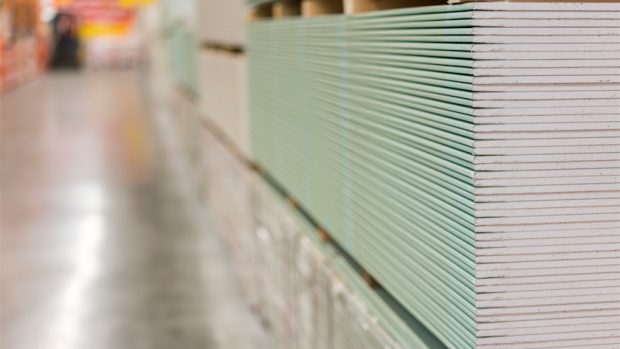
Plasterboard is a construction material made from gypsum (sulfate dihydrate), card, and other additives. The gypsum is mixed with water and then spread between two sheets of paper or cardboard. It’s then left to dry and harden, forming a board that can be used in construction.
It’s sometimes called gypsum board, wallboard, or just board.
Natural gypsum
Natural gypsum is mined in the UK primarily from three separate locations: Sussex, Lincolnshire, and Yorkshire.
Gypsum is a white rock, but can coloured grey, brown, or pink as a result of impurities. Its chemical name is calcium sulphate dihydrate and contains approximately 70 calcium sulphate and 21 water by weight.
Synthetic gypsum
The majority of gypsum used in plasterboard production is synthetic.
It’s produced in several industries, but it mainly comes from processing power station waste gas.
The gas is passed through scrubbers or filters to remove the sulphur in a process known as FGD (flue gas desulphurisation). This reduces sulphur dioxide emissions and creates gypsum as a by-product.
Recycled gypsum
Plasterboard and other gypsum products can be repurporsed and turned back into plasterboard. Once we’ve collected your plasterboard it will be separated from the rest of your waste and taken to one of our carelfully selected reprocessing plants.
The plasterboard is shredded, milled, and screened into two separate waste steams – powder and paper. The recycled powder (gypsum) is BSI PAS109 compliant which means we can recycle 100% of the plasterboard you get rid of.
What is plasterboard used for?
Plasterboard is used to help builders and designers meet stringent building code requirements for fire protection, acoustic insulation, and thermal efficiency. It can also be used to control condensation, which helps to prevent damage caused by damp rot.
Plasterboard is a commonly used material in all manner of construction jobs, but it’s mainly used on interior walls and ceilings.
What is the legislation on plasterboard disposal?
The Environmental Agency legislated a ban in 2008/2009 on dumping gypsum-based materials in landfills, including plasterboard. Instead, they should be separated for processing and recycling.
Domestic plasterboard disposal
If you dispose of small amounts of plasterboard, you can try your local tip. However, as plasterboard has to be disposed of carefully and separately, not all locations have the ability to take it.
Commercial plasterboard disposal
If you need to dispose of large quantities from a building site or are disposing of a large amount of plasterboard removed from your home. In that case, your best option will be to hire a plasterboard only skip to allow you to keep it segregated and dispose of it in one go.
Is plasterboard hazardous waste?
Whilst plasterboard itself is technically non-hazardous, it needs to be carefully disposed of to prevent it from becoming hazardous waste.
If plasterboard waste isn’t processed safely, it can pose a severe risk to both the environment and people.>
Why does plasterboard need to be disposed of separately?
If plasterboard is disposed of with biodegradable materials or other mixed waste, it can produce odorous and toxic hydrogen sulphide gas. This happens through a process called putrefaction.
As the gas is heavier than air, it pools in the environment. For example, if you dispose of plasterboard with household waste and it ends up in a landfill, you can get large pools of toxic gas forming in the landfill.
olor sit amet, consectetur adipiscing elit. Ut elit tellus, luctus nec ullamcorper mattis, pulvinar dapibus leo.
What are the dangers associated with hydrogen sulphide?
In small concentrations, the hydrogen sulphide created during the putrefaction process can leave an unpleasant smell reminiscent of rotten eggs. This can cause slight irritation if there is only a tiny amount.
However, if this is allowed to build up and is inhaled, it can result in nausea, headaches, and disturbed sleep. In addition, it can potentially cause serious issues for individuals with asthma or other breathing problems.
Hydrogen sulphide is also highly flammable at high enough concentrations.
How to dispose of plasterboard
Can I burn plasterboard?
The plasterboard should absolutely not be burned. Whilst plasterboard is considered non-hazardous when used and disposed of properly, mistreating the material can produce toxic gases that are harmful to the environment and individuals. Furthermore, plasterboard can be properly recycled to reduce the harmful effects; there is no need to put it on a bonfire.
Can plasterboard be disposed of with general waste?
No – plasterboard should not be disposed of with general waste. If plasterboard gets wet or is exposed to biodegradable waste, it can start to putrefy or decay and produce hydrogen sulphide gas.
This is a legal requirement, too; all waste products containing gypsum have to be kept separate to be recovered or recycled wherever possible and to prevent the release of toxic gas into the environment.
Can plasterboard be recycled or taken to the tip?
Check with your local tip or recycling centre to see if they will take it before you go. They might charge extra if they’re willing to take it as it must be separated for processing.
When plasterboard is responsibly disposed of, it will be recycled or repurposed wherever possible. The individual components in plasterboard can be recycled for various purposes in other industries or may be turned back into new plasterboard.
Can you put plasterboard in a skip?
Yes, you can put plasterboard in a skip, but only if the waste management company has the facilities to process it. It
must be processed separately, so check with your skip hire company first.
At Norris you can hire a skip for plasterboard only. You cannot mix plasterboard and general waste in the same skip however, if you have a small amount please call the team as we may still be able to help.
You can find some more information on cost in our FAQ section.
-
Share article


